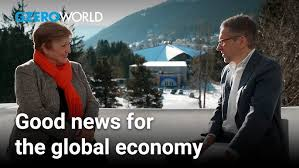
Despite ongoing trade wars, geopolitical shocks, and global uncertainty, the International Monetary Fund recently upgraded its global growth outlook for 2026. On the sidelines of the World Economic Forum in Davos, Ian Bremmer presses IMF Managing Director Kristalina Georgieva on the decision to upgrade the forecast, especially for the eurozone–a move that caught even seasoned observers off guard.
Georgieva says the global economy has been surprisingly resilient for four reasons: a more agile private sector, the limited impact of tariffs, early productivity gains from AI, and the hard-earned discipline of central banks and finance ministries since the global financial crisis. Together, she argues, these forces are quietly buffering the world economy from turbulence. But just because the economy has been resilient, doesn’t mean it will stay that way.
“Mark my words, we should not take this for granted,” Georgieva says, “We have to always remind countries of the benefits and costs of how they choose to participate in trade.”