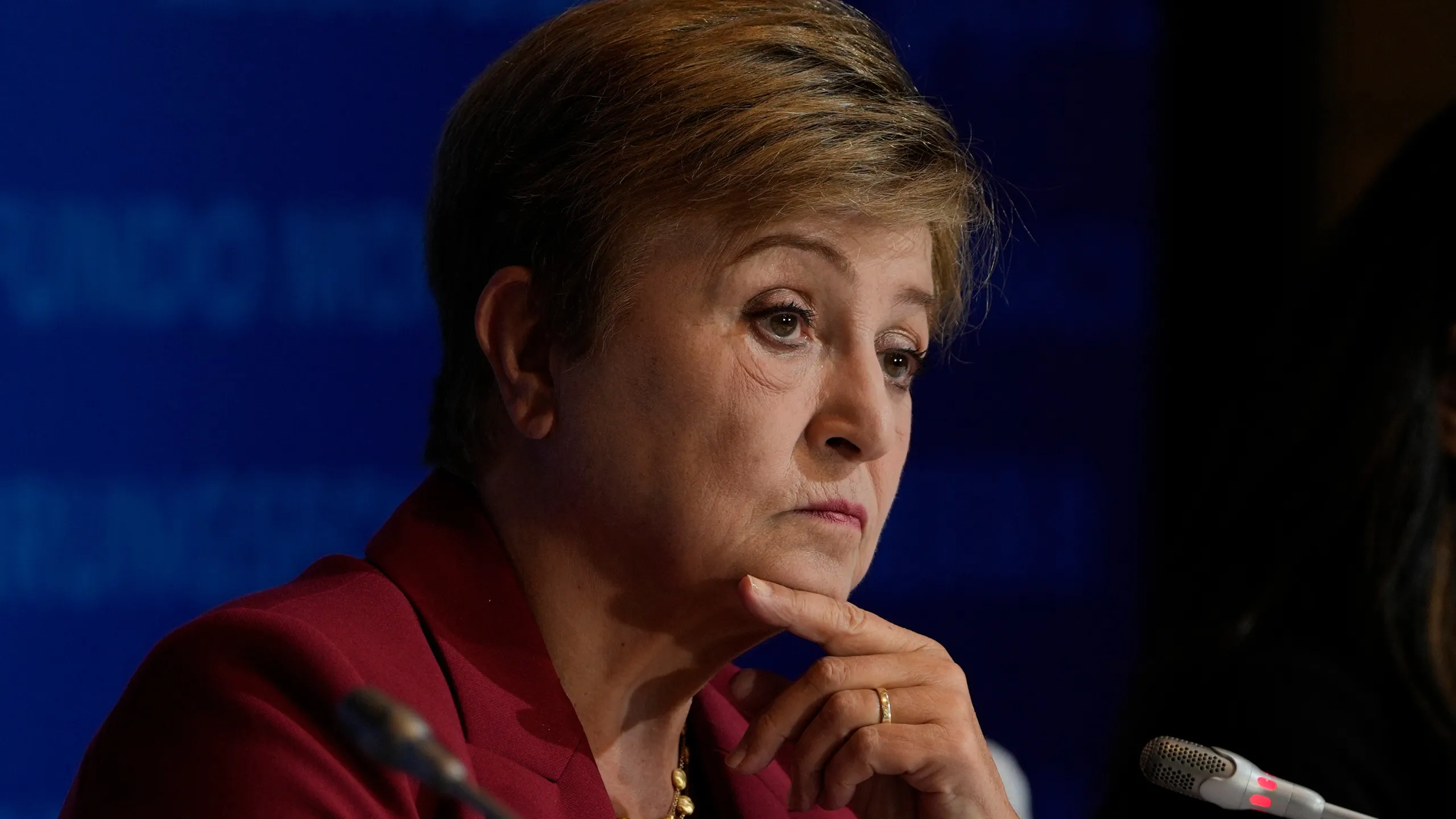
The war in Iran has dealt a new blow to the world economy, which the head of the International Monetary Fund said on Thursday will mean slower growth this year because of the destruction of energy infrastructure and supply chain disruptions.
The fragile two-week truce that the United States and Iran agreed to this week could temper the economic damage from the war. But Kristalina Georgieva, the I.M.F.’s managing director, warned that even in the most optimistic scenario there would be significant fallout for the global economy.
“Even in a best case, there will be no neat and clean return to the status quo ante,” Ms. Georgieva said in a speech ahead of next week’s spring meetings of the I.M.F. and the World Bank. “What we do know is that growth will be slower — even if the new peace is durable.”
The most recent I.M.F. forecasts last October projected that global growth would slow to 3.1 percent this year, from 3.2 percent in 2025. Ms. Georgieva said the I.M.F. was expecting to upgrade its growth outlook before the war roiled global energy markets.
The war has sent oil prices above $100 a barrel and pushed the price of gasoline in the United States above $4 a gallon. After a post-pandemic inflation shock, the war could lead to another bout of rising prices, higher interest rates and slower economic growth.
“Higher prices for key inputs feed into many consumer goods, lifting inflation,” Ms. Georgieva said. “If inflation expectations threaten to break anchor and ignite a costly inflation spiral, then central banks should step in firmly with rate hikes.”
The minutes from the most recent Federal Reserve meeting showed that officials at the U.S. central bank were taking a cautious approach to assessing the impact of the war. As policymakers held rates steady, the minutes showed that they were acutely attuned to the risk that a prolonged crisis could lead to more intense price pressures that, if sustained, could affect underlying measures of inflation.
Ms. Georgieva noted that because central banks were slow to raise interest rates when inflation picked up after the pandemic, there is a risk that they could do so too quickly now.
“Concentrate on conditions,” Ms. Georgieva said. “Because if you tighten prematurely and unnecessarily, you’re throwing cold water on growth.”
The I.M.F. has downplayed its green energy initiatives since President Trump returned to the White House last year. However, Ms. Georgieva did say that oil price shocks underscored the need to think broadly about energy security.
“As the world responds, it is important that we maintain our collective quest for energy efficiency and energy diversification,” she said.
The I.M.F. will publish economic forecasts for several scenarios for the outcome of the war when it releases its projections next Tuesday.