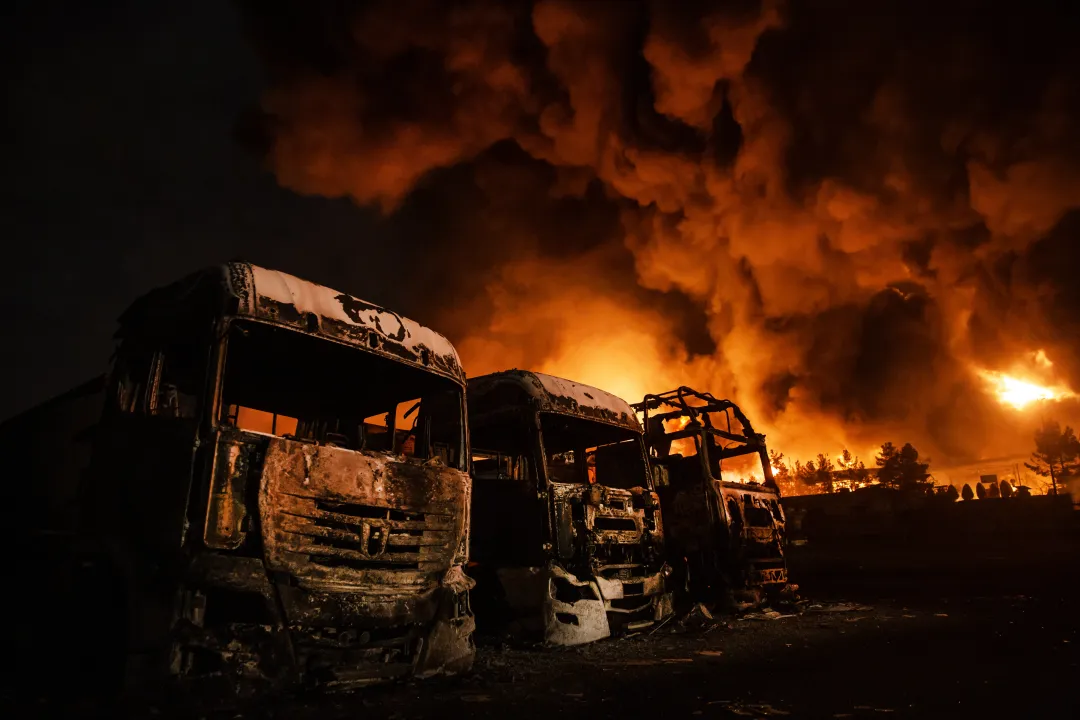
For months, America’s war with Iran has been slowly suffocating the global economy.
In March, Iran closed the Strait of Hormuz — the narrow waterway that links the Persian Gulf’s oil reserves to global markets. As a result, energy prices steadily rose while stock markets and growth forecasts fell. Analysts started warning that, if the Strait did not reopen soon, the global economy could slide into a deep recession.
And then, Tuesday night, these storm clouds scattered: The US and Iran reached an agreement on a ceasefire, one that would ostensibly pause American attacks on the Islamic Republic, in exchange for a resumption of transit in the Strait.
Oil prices swiftly fell by as much as 20 percent, while the Dow jumped more than 1,000 points.
And yet, some fear that Wall Street’s mood has brightened faster than geopolitical reality. Israel continued attacking Iranian proxies in Lebanon on Wednesday, in alleged defiance of the ceasefire agreement. Iran, meanwhile, kept the Strait shuttered, accused the US of violating the terms of their understanding, and declared negotiations with America “unreasonable.”
To get a clearer picture of what all this means, I spoke with the oil market expert Rory Johnston on Wednesday. Author of the popular newsletter, Commodity Context, Johnston has long argued that investors are underpricing the risks of the US-Iran conflict.
We spoke about why time may be on Iran’s side in a war of attrition, what a postwar global economy could look like, and how US consumers will fare in the most optimistic — and pessimistic — scenarios. Our conversation has been edited for clarity and concision.
And then, Tuesday night, these storm clouds scattered: The US and Iran reached an agreement on a ceasefire, one that would ostensibly pause American attacks on the Islamic Republic, in exchange for a resumption of transit in the Strait.
Oil prices swiftly fell by as much as 20 percent, while the Dow jumped more than 1,000 points.
And yet, some fear that Wall Street’s mood has brightened faster than geopolitical reality. Israel continued attacking Iranian proxies in Lebanon on Wednesday, in alleged defiance of the ceasefire agreement. Iran, meanwhile, kept the Strait shuttered, accused the US of violating the terms of their understanding, and declared negotiations with America “unreasonable.”
To get a clearer picture of what all this means, I spoke with the oil market expert Rory Johnston on Wednesday. Author of the popular newsletter, Commodity Context, Johnston has long argued that investors are underpricing the risks of the US-Iran conflict.
We spoke about why time may be on Iran’s side in a war of attrition, what a postwar global economy could look like, and how US consumers will fare in the most optimistic — and pessimistic — scenarios. Our conversation has been edited for clarity and concision.