
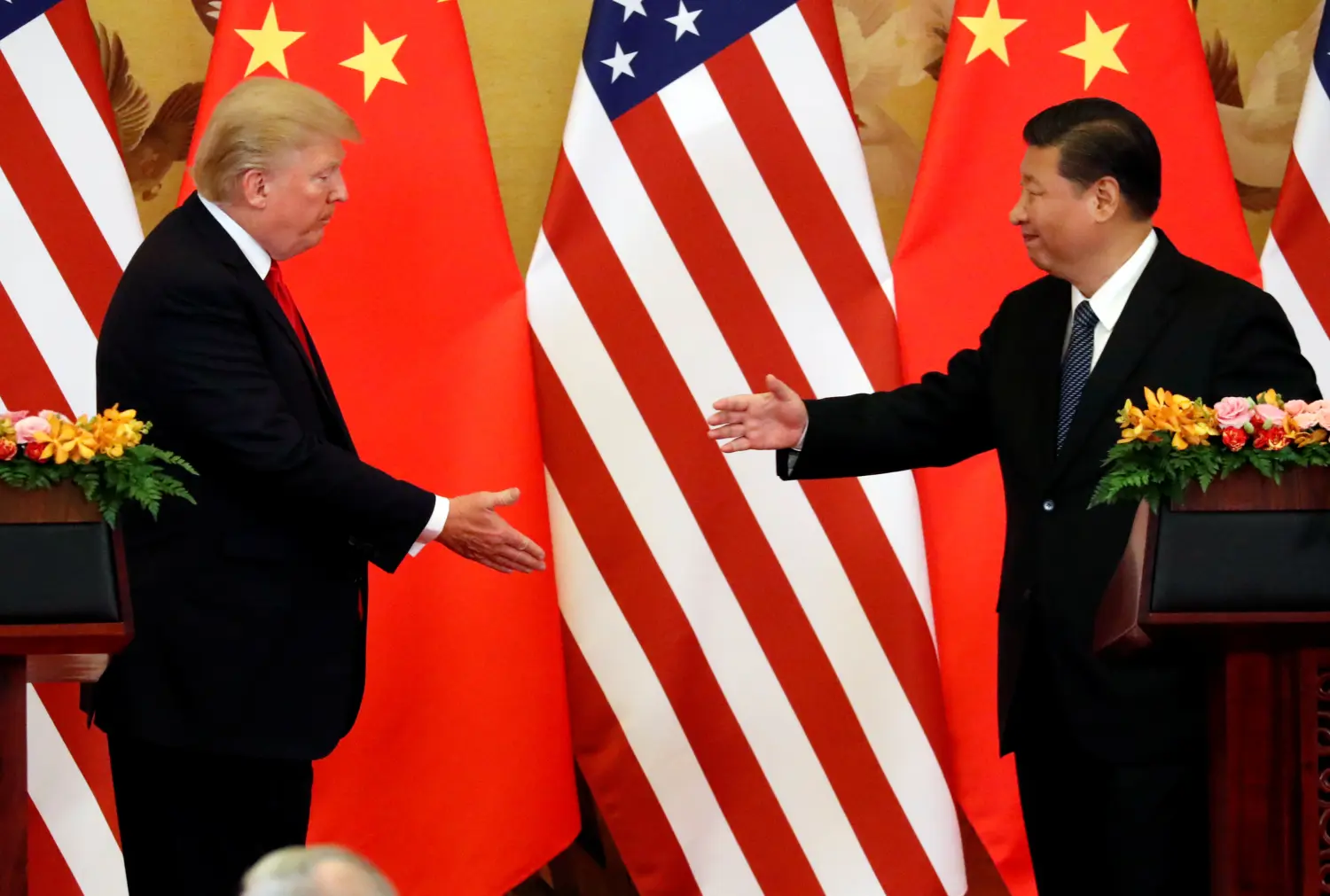
It appears that the prevailing zero-sum narrative surrounding China-US competition is facing growing scrutiny, with voices urging a focus on the revitalization of the US itself as the true source of strength.
This sentiment was on display in a Tuesday commentary in The New York Times headlined “I Just Returned From China. We Are Not Winning.”
The article acknowledged that neither diplomatic pressure nor aggressive tariff policies could curb China’s development. Instead, it claimed that “The only real solution is to get our house in order and beat China at its own game.”
Yet, the significance of visits to China by Americans from various sectors should not be limited to anxiety over whether “we are not winning.” Such exchanges ought to serve as a valuable opportunity to understand China’s development, and, more importantly, to reflect on America’s own development path.
Unfortunately, some in the US still define China-US relations narrowly as “competition,” or even as a zero-sum game, as if containing China would guarantee America’s victory in this so-called “contest.”
Yet, persisting in defying economic logic and politicizing trade issues will ultimately harm businesses and consumers in both countries. The US possesses strengths in high-end manufacturing, technological innovation, and financial services, while China has advantages in manufacturing supply chains, infrastructure development, and the application of digital economies.
These differences are natural outcomes of the global division of labor. To frame such divergence as a threat is to politicize economic relations, narrowing the space for cooperation. The deep complementarity between the two economies should be seen as a valuable asset, one that enables joint responses to global challenges and contributes to the stable growth of the world economy, rather than misconstrued as a “source of risk”.
Another drawback of overemphasizing the notion of “winning or losing” is that it risks diverting attention from the more pressing challenges at home. The US faces evident structural strains, such as stubborn inflation, aging infrastructure, urgent needs for industrial upgrading, and persistent federal budget deficits.
These issues were not caused by China’s development, but they are symptoms of lagging domestic economic restructuring. Addressing them requires not scapegoating an external rival, but refocusing on core domestic priorities: modernizing infrastructure, upgrading industrial composition, and improving public welfare. Ultimately, a nation’s competitiveness is fortified not by fixating on containment, but by effectively managing its own affairs.
China’s experience demonstrates that national development and competitiveness are fundamentally achieved through continuously deepening reform, expanding openness, stimulating societal innovation, and tangibly improving people’s livelihoods.
China is now striving for high-quality development and fostering new quality productive forces. This represents a process of deepening domestic structural reform to generate new growth drivers for both itself and the global economy.
The essence of China-US economic and trade relations is mutual benefit and win-win results, and the two countries gain from cooperation and lose from confrontation. The deep integration of China-US industrial and supply chains is the result of market forces and corporate choices. Any attempt to interfere in normal economic and trade cooperation through political means will eventually backfire.
China has consistently treated and handled its relations with the US in a responsible manner. China’s Ministry of Commerce said in late January that the country is willing to work with the US to properly manage differences, advance cooperation, and promote the stable, sound and sustainable development of bilateral economic and trade relations.
History shows that the right way to measure a country’s competitiveness is not by who is tougher, more closed-off, or more confrontational, but by who can more firmly advance reform and opening-up, better stimulate innovation, and more effectively improve people’s well-being. If the US can shift its focus from containing others to building itself up, it will not only help address its own challenges, but also bring greater certainty to China-US relations and the world at large.