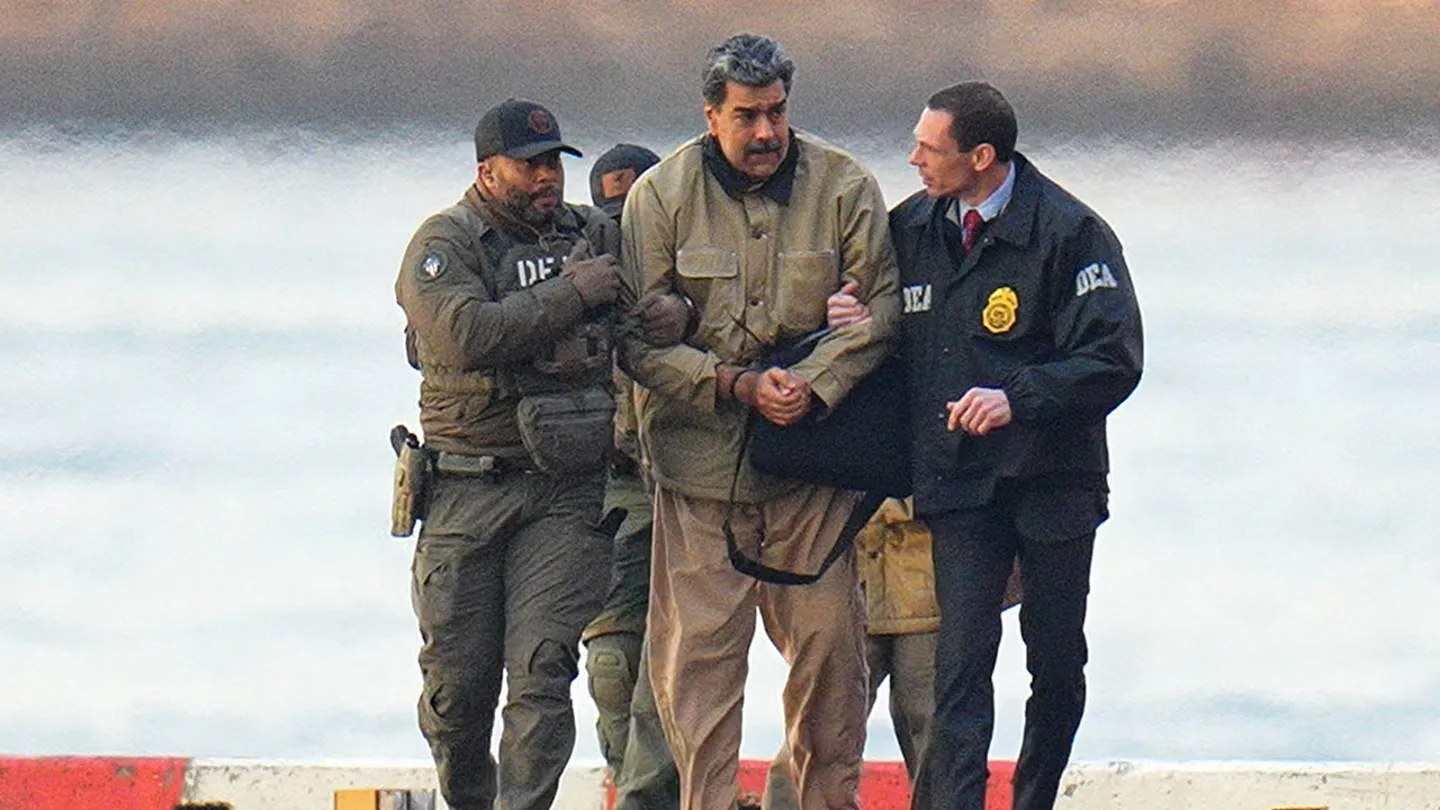
The arrest of former Venezuelan President Nicolás Maduro has reopened debate over whether the country’s long-isolated economy could soon re-engage with global markets, but analysts caution that sanctions relief and recovery are far from guaranteed.
Venezuela is among the world’s most heavily sanctioned countries, alongside Russia, Iran, Syria, North Korea and Cuba, a status that has severely restricted its access to international finance and trade.
Andres Martinez-Fernandez, a senior policy analyst at the Heritage Foundation’s Allison Center for National Security, warned that lifting those sanctions now would be premature, saying Maduro’s removal has not yet translated into meaningful institutional change.
“It would be a mistake for any nation to remove sanctions on Venezuela at this moment,” Martinez-Fernandez said, noting that “the remnants of the Maduro regime remain in control of key institutions in Venezuela and have not yet made commitments to a transition that would fully halt the threat posed to the United States and restore stability and democracy to Venezuela.”
“Maduro’s arrest opens up a path for sanctions to press the regime toward a necessary transition,” he added, saying that “premature removal of this pressure would send the wrong message to Caracas.”
His comments reflect concerns among U.S. policymakers that Venezuela’s military, courts, central bank and state oil company remain dominated by officials appointed under Maduro, many of whom are still sanctioned by Washington. That reality complicates hopes that Maduro’s capture could quickly unlock Venezuela’s oil sector or stabilize an economy that has been in prolonged decline.
At the same time, energy experts say that even if sanctions remain in place, uncertainty over who now controls Venezuela’s economic levers is already weighing on prospects for oil production and exports — the country’s primary source of revenue.
“For now, we have no details about how these fiscal and legal arrangements will evolve,” Goldwyn said. “Until there is clarity on sanctions and licensing and more information on who is actually managing the central bank and ministry of finance, the prospects for Venezuelan oil production and exports will remain uncertain.”
That uncertainty is compounded by the condition of Venezuela’s energy sector itself.
Julia Buxton, a law professor at Liverpool John Moores University, told Fox News Digital that “the national oil infrastructure is devastated and will require billions in investment to fix.”
“There are ongoing legal claims that need to be settled, including compensation claims for expropriation and non-payment of Venezuelan oil bonds,” added Buxton, who is also a regional head at Oxford Analytica, a Dow Jones–owned geopolitical analysis and advisory firm, covering Venezuela.
Those liabilities, Buxton said, could further complicate efforts to attract foreign capital or restart large-scale oil production, underscoring that Maduro’s capture alone is unlikely to deliver a quick economic turnaround.